
Consistency over feelings.
Saturdays were the longest days in the village. The kind that stretched your patience and tested your obedience. There was no school to rescue us. No bell to mark the end of toil. Just the endless rhythm of my mother’s voice and the rustle of dry earth meeting seed.
My siblings and I worked in quiet rebellion. Our silence louder than any complaint we could ever dare to utter. Four hours later, our resentment had settled in like dust thick, stubborn and familiar. Then, as the last of the seeds slipped through my mother’s hands, a flicker of forbidden joy lit our weary faces. The sack was empty. Salvation had come dressed as scarcity.
For a moment, hope dared to rise maybe, just maybe, the day’s labour was done. But in the village, joy was never that simple.
When my mother woke us up to go to the farm, she didn’t ask “Do you feel like working today?”
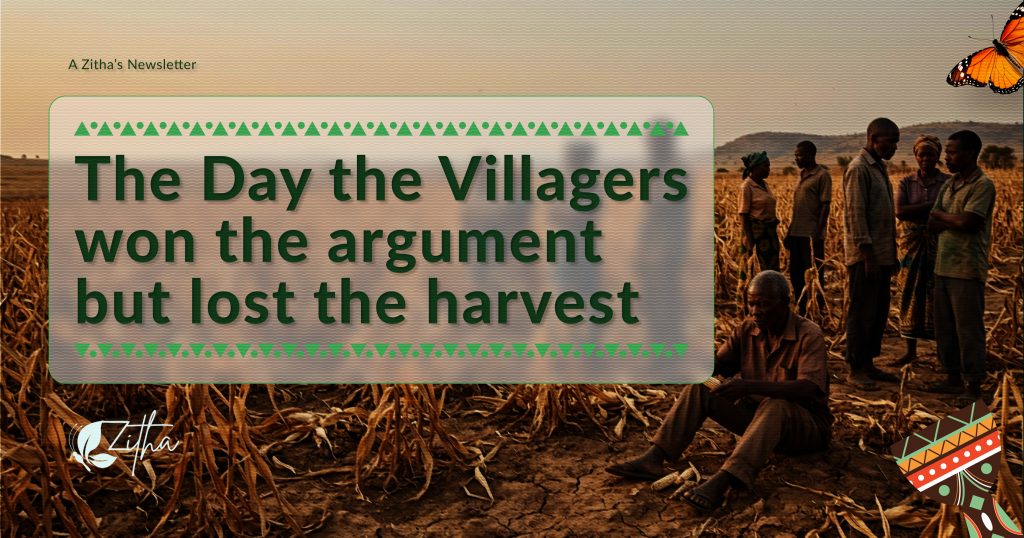
Because in the village, life didn’t wait for your emotions to agree before moving forward. Feelings didn’t feed you. Whether your heart was heavy or light, life demanded motion even when your spirit lagged. You were expected to move, to tend, to show up, not because you always wanted to, but because it was what had to be done. Lingering in your feelings was seen as a luxury life, you could be disciplined for.
If you sat too long in sorrow, the water would not fetch itself. If you waited for motivation, the fire would die out. The elders would say, “Feelings don’t fill the granary.” And though it sounded harsh, it was consistency that taught us emotional discipline. While feelings change like the wind, commitment anchors the soul. In the village, we learned early that maturity meant mastering your emotions before they mastered you, feel deeply yes, but keep moving.
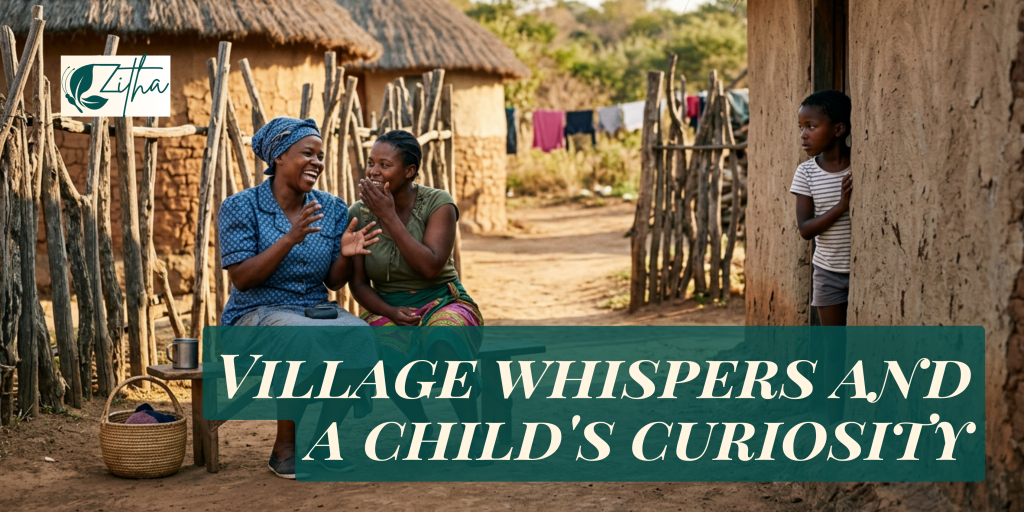
The village was a tapestry of toil and routine, the work never paused. Effort, not emotion, kept the village turning. Yet amid this relentless rhythm, a spark of childhood curiosity burned bright, untamed and defiant, sometimes clashing with the drumbeat of duty.
On that fateful Saturday when the seeds finished, my mother her voice a blend of wisdom and steel, said, “Zee, run to your auntie’s and fetch more seeds. We need to finish what we started.” Her words didn’t ask, they commanded.
Once the sowing season started, we didn’t stop, we had to stay faithful to our work because finishing planting late was a mark of laziness, a crime my mother considered almost heretical. To her, dragging your feet past the season was shameful, and trust me, she had no patience for such nonsense.
I set off to my aunties immediately, my eyes dancing with excitement, any distraction from the planting was so appreciated. The path to my auntie’s house was like a secret corridor between two ancient mountains. One, named Nsubu meaning “Baldie”, for its smooth, gleaming slopes stood majestic, its beauty a siren’s call. Each step felt like a suspension of time, as if the world held its breath, inviting me to linger in its wonder. Every leaf, every stone seemed to pulse with its own story, whispering: Stay. Explore. Dream.
But duty tugged at my heart, sowing season demanded fidelity, to falter was to court shame. Yet temptation beckoned. Along the path, schoolmates appeared, their voices bright with mischief. “There’s a spot up Nsubu,” they said, “where we can slide down the mountain on tree branches.” They said it so casually, like sliding off a mountain was part of the school curriculum.
Now, I don’t know what possessed me, maybe the spirit of adventure, but I agreed. We climbed up with our little tree branches, our hearts full of bravery and our brains empty of common sense.
The wind hit my face as I slid, and I felt like the queen of the mountain. It was freedom, laughter, and madness all rolled into one. We did this so many times until, well, until reality met friction, the back of my dress and panties had disappeared, my bum was on fire, and suddenly I remembered my mother was waiting. I even forgot I hadn’t reached my destination, a crime with its own separate sentencing, neatly stacked on top of the one I’d already earned. In village terms, that wasn’t just trouble, it was a package deal with no chance of parole.
The walk home was a march of dread, each step stinging with pain and regret. Consistency over feelings? How? I wept steadily, knowing my fate was sealed. When my siblings saw the back of my dress, they all went, “Aaaaaah!” that long, dramatic village “aaaaaah” that doesn’t need translation. It wasn’t sympathy, it wasn’t concern, it was a public announcement that said, “You are finished, and your miracle season has officially ended.” It meant “Wait till mum sees this.” It meant “We’re about to witness a live episode of Correction Chronicles.” None of my siblings even dared to suggest I hide it from mum, self-preservation was a family value. They’d seen enough “Correction Chronicles” to know better than to feature in the sequel. Each of them suddenly went into their ministries of minding their own business, quietly disowning me in advance. In our house, meddling in someone’s dodgy business was like volunteering as tribute, noble, but entirely unnecessary.
But let me tell you, that was the last day I ever slid down that mountain.
I won’t recount the discipline that followed, you know the kind. During the “Correction Chronicles”, I was made to repeat to myself countless times,” Kufanele ngazi iskhathi sokusebenza, lesokudlala” meaning “I must know when to work and when to play,” (but we were never given time to play) until the words became a mantra. However afterwards, I was certain my real mother was out there somewhere, and she would not agree to the injustice l had suffered. But the lesson l learnt was that adventure carries consequences, and consistency means staying the course you’re set upon.
Looking back, I can’t help but laugh not just at the mountain’s betrayal or my poor dress but at the wild, untamed rhythm of African childhood itself. Back then, our days were stitched together with chores and by the time you were done, playtime felt like a myth whispered by lazy children from another land.
And yet, somehow, we always found adventure in between the cracks of responsibility. That day wasn’t just about being late or inconsistent, it was about being alive. It was about curiosity outpacing common sense.
Now, when I think of that day, I don’t remember the pain, I remember the joy. The freedom. The pure simple rhythm of consistency that somehow shaped me. Every scar, every scolding, every detour from my task was a love letter from my childhood saying,
l lived.
l learned.
And l laughed anyway.
Long after l left the village, l discovered consistency was a quiet alchemist. Be consistent long enough, and excuses lose their potency. Persist through the absence of feeling, and your spirit learns endurance, your hands obedience. I was raised by fire, but fire alone doesn’t forge strength, it reveals it. Consistency, the daily act of choosing duty over desire, transforms fleeting heat into enduring power, raw pain into quiet strength.
Feelings are fickle, shifting with the wind, the weather, the mood of a moment. But consistency, builds stamina, it carves character. It trains the heart to follow truth over emotion. In the village, we weren’t led by impulses, we were led by responsibility. And that lesson became my cornerstone, transformation isn’t born of fleeting emotion but of steadfast repetition.
So plant your seeds, tend your fire, climb your mountains. Slide, laugh, and yes, face the discipline that follows. But know that consistency over feelings builds not just a life, but a story worth telling and legacy that endures. Keep being consistent. Your heritage depends on it.
Take aways for you Transformers
- Consistency Is the bridge between duty and destiny.
Feelings do not feed you, effort does.
Growth happens not when you feel ready, but when you show up anyway.
- Emotion is a passenger, commitment must drive
Feelings are unreliable, commitment is steady.
Maturity means showing up even when fun hides.
- Every detour has a lesson, even the painful ones
Mistakes burn, but they also teach.
Discipline turns rebellion into wisdom.
- Consistency weaves legacy not perfection
Legacy is built on faithfulness, not flawlessness.
Keep watering the ground, even when nothing grows yet.