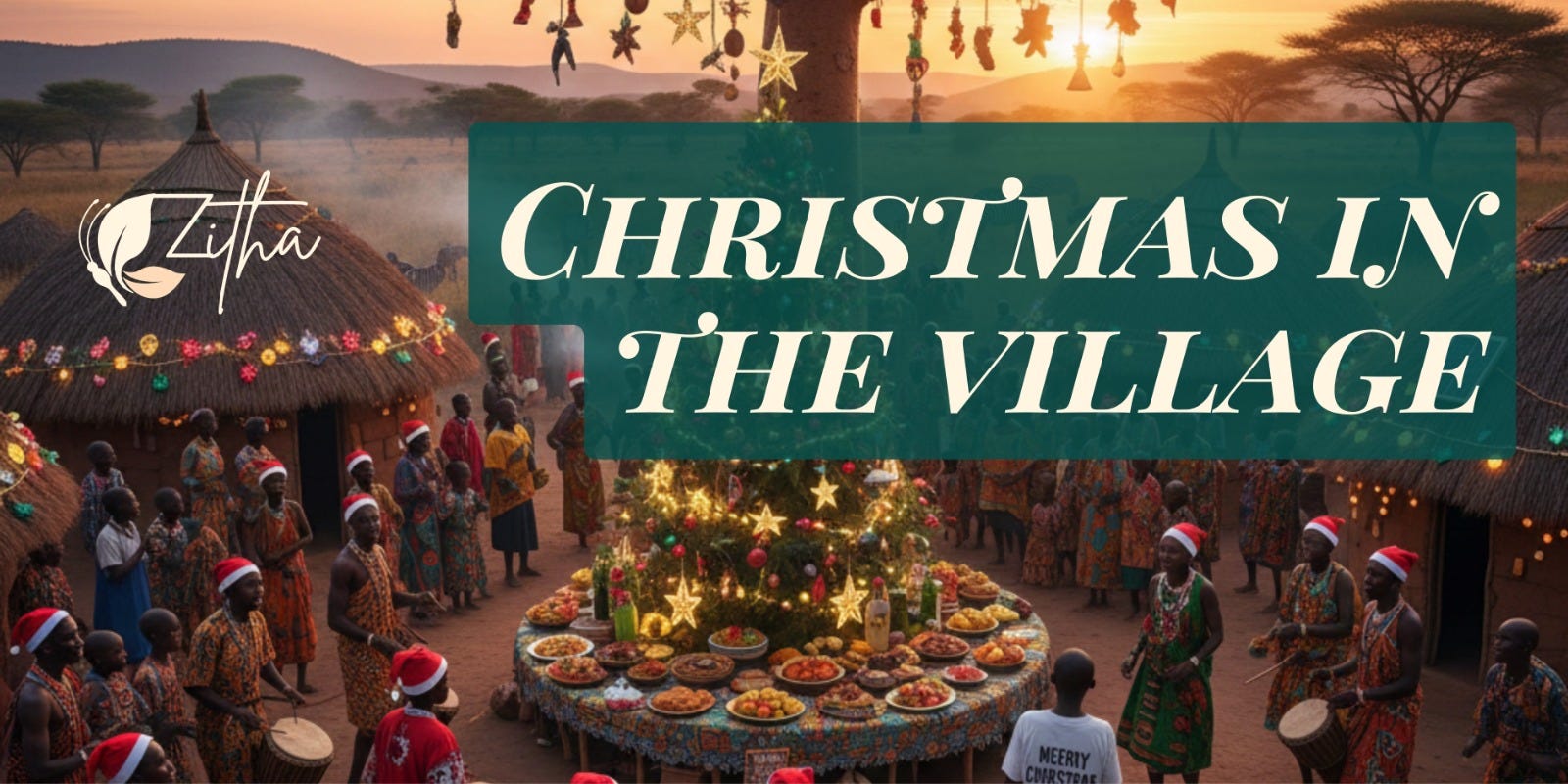
Christmas in the village carried a kind of magic an electric, lawless thrill that could make even the most well behaved child abandon every rule they had ever learned. It did not tiptoe into our lives politely, no, it exploded into them with the clatter of pots, dust rising from dancing feet, and children vibrating with so much excitement we could have powered the entire village if someone had plugged us into a socket.
My father approached Christmas with the seriousness of a five-star general preparing for battle. Out came the goat and the sheep our Christmas VIPs, escorted with the ceremony of royalty.
(And before anyone starts murmuring about cruelty, let me be clear, these animals lived better than some people’s in-laws. We raised them with love, knowing they were part of our culture, our diet, and our celebration.)
Once they were slaughtered the magic migrated to the kitchen.
Out came the pots the heavy black ones that only saw daylight during Christmas, wedding and funerals. Into them went meat, water, and a confident handful of salt. Nothing more. But somehow, that simplicity stirred itself into a fragrance so heavenly the wind paused just to inhale. The whole yard transformed into a perfume of heritage. And when the meat was ready tender, salty, unapologetically perfect it made you close your eyes mid-chew and whisper gratitude for being born into the right family the Namate clan.
For us children, Christmas was the season when life shimmered with wild possibility.
New shoes that pinched our toes mercilessly but made us strut like we owned the land. New clothes stiff smelling of fresh fabric, we felt good.
And the fizzy drinks Coca-Cola, Fanta, Sprite, Mazoe squash lined up like trophies. We drank until our stomachs rebelled and then drank some more because Christmas gave us diplomatic immunity.
The whole village throbbed with music, and even the old grannies God bless their reckless joy, joined the dance. They shuffled, giggled, and swung their hips in slow motion, knees creaking like old doors but spirits dancing like teenagers. Joy, we learned, never retires, it only adjusts its speed.
And that is when the storytelling began.
Christmas untied tongues and unclipped memories. Grannies settled into their mats with dramatic sighs, cleared their throats like seasoned performers, and embarked on their legendary “When I was young…” monologues the kind that inflated our curiosity until it nearly carried us straight into trouble.
So when my Gran launched into her familiar introduction, I saw my moment. I had been nursing a question for months. Christmas courage, stubborn, sugary, and stupid had me feeling bold.
Before she could reach her second sentence, I jumped in like a journalist chasing a scandal.
“Gogo, how old were you when you started dating?”
The silence that followed could have cooked its own meal.
Then “Hayi wena uyahlanya yini?” direct translation “no you are you mad”and before I could breathe, my ear was seized by the legendary grip of you-know-who. Christmas courage evaporated like steam from hot porridge.
“You don’t dare ask adults such silly questions!” she declared, still attached to my ear like a disciplinary earring.
My siblings collapsed into laughter no sympathy, until she turned and said, “Keep laughing and you’ll join her.”
Silence.
Instant silence.
But not even that could dim the glow of Christmas. If anything, it added spice.
Christmas made us bold. Reckless, even.
It was the only time we could eat sweets without counting, because even the adults surrendered to indulgence. Dogs strutted around chewing T-bone steaks far too luxurious for the other 364 days of the year. Even the dogs sensed the generosity floating in the air. The whole world seemed softer, kinder, more forgiving.
Except, of course, my mother.
She was hard on the outside but gentle on the inside, generous without trying, but she watched the Christmas frenzy with the expression of someone observing a dress rehearsal for disaster. To her, Christmas was not a celebration it was an annual festival of irresponsible spending. She shook her head as money flew out of pockets like birds fleeing a tree, muttering, “Money has wings, and Christmas makes it fly faster.”
Yet, come January when neighbours staggered to our doorstep, devastated by their 13th-cheque decisions she would lecture them thoroughly on financial discipline before handing them a whole bag of food. My mother’s words stung, but her heart always fed.
As children, we didn’t care about adult economics. January disease belonged to grown-ups. We were too busy enjoying the sweet taste of freedom, freedom that allowed us to return home after six o’clock. That alone felt like touching the edge of heaven.
That particular Christmas, the whole village pulsed with one unstoppable anthem “Motherland” by Yvonne Chakachaka. It boomed from every direction, stitching itself into our souls. And when the music hit, something inside me woke up. Perhaps it was confidence. Perhaps it was pure sugar. Either way, it pushed me into the centre of the dancing circle.
And I danced.
The dance was called iskokotshi a style that demanded high betrayal commitment from your waist. I twisted, shook, and bent like the ground owed me glory. The crowd roared. My siblings watched with pride.
When the applause hit, I felt invincible.
When morning came, I felt sixty.
My waist burned with a deep, unforgiving heat that made standing an act of sheer will. Every attempt to straighten sent a sharp reminder that my body was no longer cooperating, and walking became a quiet, desperate prayer. In moments, Gran’s walking stick was placed in my hand a symbol of her strength and frailty that I wasn’t ready to claim. Pride rose first, but relief followed quickly as the smooth, familiar wood steadied me. As much as it humbled me, it helped, and in that silent exchange between pain and acceptance, I leaned into the support I never wanted but suddenly could not do without.
And my siblings… oh, they pounced on my misery with the enthusiasm of vultures spotting something fresh. Their laughter filled the house like an alarm siren.
My mother glanced over with the calm of someone who had already foreseen this disaster.
“No sympathy for self-inflicted pain,” she said.
“Next time, dance with your brains, not your bones.”
Still, she supervised as my siblings steaming my waist to ease my muscles with hot cloths, and by nightfall, I slept like a wounded warrior finally released from duty.
The next morning, life resumed.
The sun rose.
The farm awaited.
When my mother woke us up l picked up the stick all l heard was “usuyi salukazi wena” meaning are you an old lady. That was enough, l dropped the walking stick like it was hot. Though every step tugged at my aching waist, I pressed on. Slowly, the pain blurred.
And even now, long after childhood has loosened its grip, a part of me still longs for those village Christmases the laughter, the chaos, the music that made our hearts gallop, and the sweetness of a life where joy came free and abundant.
I would not trade it for anything.
Not even for the wisdom that came after.
4 Takeaways for Transformers
1. Joy Has a Cost, but It Is Never a Waste
Joy isn’t always tidy or reasonable; sometimes it asks you to live so fully it leaves your body aching. Pain may follow, but true joy is never wasted. It leaves deposits in the soul no regret can erase.
2. Pride Will Break You Before Life Ever Does
The walking stick was more than support, it was a mirror showing that the help we resist is often the help we need. Refusing support becomes its own form of bondage. Humility opens the door to healing and strength beyond ego.
3. Generosity Is a Language the Heart Speaks Fluently
Your mother’s sternness wrapped in quiet generosity shows that correction and compassion can coexist. You can speak truth and still give freely. Mature love is measured not in feeling, but in what the heart is willing to offer.
4. Childhood Joy Is a Map — Follow It Back to Yourself
Those Christmases weren’t just memories; they were anchors to a simpler, abundant kind of joy. When life grows heavy, return to what once made you feel alive. Nostalgia isn’t escape it’s restoration, guiding you back to who you were before life dimmed your spark.