Our village was known for many good things. The people were hardworking, resilient, generous with one another and never afraid of speaking their minds. Around the cooking fires and beneath the old Mopane tree, conversations were as much a part of village life as planting and harvesting. We loved discussing ideas, sharing experiences and offering opinions on almost everything from whose rooster crowed first to whether goats understood human conversations. In our village, everyone was blessed with two gifts: a strong back for working the land and an even stronger voice for expressing what they believed. Most of the time, those gifts served us well. But every now and then, our confidence in our own opinions became louder than our willingness to listen.
One hot afternoon, the government agricultural officer arrived on his shiny bicycle. His boots were polished, his clothes neatly pressed, and his wide-brimmed hat looked as though it had never experienced a single grain of dust. Some villagers became suspicious before he had even spoken. “A man whose boots are that clean cannot possibly understand farming,” Auntie Mabende whispered, and those standing nearby nodded as though she had quoted ancient wisdom.
The officer gathered everyone beneath the old Mopane tree and spoke with confidence. “The rains are coming,” he said. “Before they arrive, each family must dig trenches around their fields. The trenches will slow the water, allowing it to soak into the soil instead of running away. Your crops will survive much longer after the rains have stopped.”
Everyone listened politely. Heads nodded. Some people even murmured, “Very wise.” But in villages like ours, agreement during the meeting meant very little. The real decisions were always made after the visitor had gone.
The moment the agricultural officer disappeared over the hill, old man Nkomo slowly stood up. Whenever he cleared his throat, everyone knew he was preparing for a speech. He looked around with great seriousness before declaring, “My people, have you noticed something? Our fathers never dug trenches. Our grandfathers never dug trenches. Yet they harvested so much maize that even the rats became too fat to run.”
The crowd burst into laughter and applause.
Auntie Mabende sprang to her feet. “Exactly!” she shouted. “That man from town wants to give us back pain. Tomorrow we will be bent over digging while he will be sitting comfortably in his office drinking tea and collecting his salary.”
Someone shouted, “Probably eating mabhanzi too (fried cake) too!”
The laughter grew louder. Soon everyone was contributing reasons why digging trenches was unnecessary. Before long, the village reached a unanimous conclusion. Trenches were a waste of time. We were independent thinkers, not trench diggers.
There is something strangely comforting about agreeing with a crowd. When enough people clap for an idea, it begins to sound like truth. Confidence spreads from person to person like fire through dry grass, until nobody remembers whether the idea was ever examined in the first place.
Throughout the entire discussion, only one man remained silent.
His name was Mr Tjiga.
He neither supported the agricultural officer nor challenged old man Nkomo. He simply listened. While everyone else was trying to be heard, he was trying to understand. He had discovered something many people never learn: wisdom often speaks softly while pride usually shouts.
That evening the village celebrated what they believed was a great victory. Fires burned brightly. Roasted meat was shared. Stories became louder with every retelling. By sunset, old oan Nkomo’s speech had become more impressive than the original version. By nightfall, people were repeating his words as though they had come directly from heaven.
Meanwhile, Mr Tjiga quietly picked up his hoe.
When the village went to sleep, he walked alone to his field. There were no witnesses, no applause and no audience. Under nothing but moonlight, he began digging. Hour after hour, he worked in silence. His back ached. His hands blistered. Sweat mixed with the dust until his clothes clung to his body. Before the first rooster crowed, he had finished digging a trench around his entire field.
He picked up his hoe, smiled quietly to himself and went home to sleep.
When the villagers woke the following morning, they discovered the trench surrounding Mr Tjiga’s field. Instead of asking him why he had dug it, they immediately began searching for an explanation that would protect their own beliefs.
“He has a tikoloshe (a supernatural being working for him),” someone whispered.
Another nodded confidently. “Who else works all night?”
An elderly woman leaned closer and lowered her voice. “Have you noticed how quiet he is? Quiet people always know strange things.”
By lunchtime, the rumour had grown so much that some villagers claimed they had actually seen mysterious creatures helping him dig during the night. Nobody had seen anything, but rumours rarely depend on evidence. They survive quite comfortably on imagination.
Mr Tjiga never defended himself.
He simply smiled and continued working.
Then the rains came.
The first few days were beautiful. Heavy drops fell onto the thirsty earth. Children danced through puddles while women sang as they planted. The village congratulated itself for rejecting unnecessary labour.
Then, just as the agricultural officer had predicted, the rain stopped.
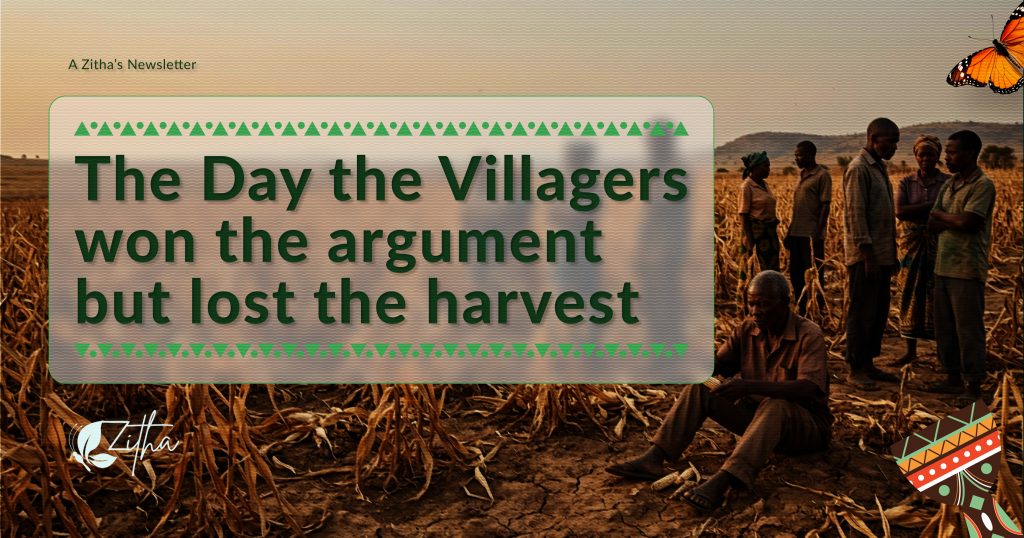
The water that had fallen so generously rushed down the hills instead of soaking into the soil. Within days, cracks appeared across the fields. The maize curled into itself. Bean plants stopped climbing. The once-green landscape slowly turned brown beneath the hot sun.
Only one field remained green.
Mr Tjiga’s.
His trenches had done exactly what they had been designed to do. They trapped the rainwater, allowing it to sink slowly into the soil. While everyone else’s fields cried out for moisture, his continued drinking from the water stored beneath the surface.
The village called another meeting.
This time nobody laughed.
People began blaming old man Nkomo.
“You misled us.”
“Why did we listen to you?”
“Who made you our expert?”
Someone asked the question that only a few weeks earlier would have sounded disrespectful.
“Did old man Nkomo even go to school?”
How quickly crowds change direction.
The very people who had applauded him now behaved as though they had never agreed with him at all.
Old man Nkomo folded his arms and replied, “I never stopped anyone from digging trenches. I did not hold a gun to anyone’s head. If you chose my opinion over the agricultural officer’s advice, that was your decision. Do not blame your laziness on me.”
The village fell silent.
His words were uncomfortable because they were true.
Harvest season arrived, and the truth could no longer be hidden.
Most families harvested disappointment. Empty baskets returned from dry fields. Parents stared at granaries that should have been full but stood almost empty. Hunger quietly moved into the village without asking anyone’s permission.
Only one family celebrated.
Mr Tjiga harvested abundance.
His maize stood tall. His granary filled. His livestock grew fat while everyone else’s animals searched for grass.
The same people who had called him a man of witchcraft now visited his home asking for food.
It is remarkable how success changes public opinion. Yesterday they believed he had a tikoloshe. Today they believed he had wisdom.
That year our village learned a lesson that no classroom could have taught us.
Crowds make decisions together, but consequences are always experienced individually.
The rain never asked what the majority had voted for. The soil never rewarded applause. The harvest did not care who won the argument beneath the mopane tree.
Every person eventually ate from their own field.
And from that day forward, whenever the village gathered beneath the Mopane tree to debate the next great idea, people would quietly glance at Mr Tjiga.
Not because he spoke the most.
But because he had taught us that wisdom is often found in the person who listens carefully, works quietly and allows the harvest not the crowd to speak for them.
Four Lessons for Transformers
1.Don’t outsource your thinking to the crowd.
Transformers understand that agreement is not the same as truth. The crowd can give you confidence, but only wisdom can give you results. Never let popular opinion replace personal discernment.
2. Quiet obedience often produces louder success than public debate.
Mr Tjiga never tried to win the argument. He chose to act instead. Transformers know that energy spent arguing is often better invested in building, preparing, and doing the work.
3. Rumours are often the price of uncommon discipline.
When people cannot explain your consistency, they may question your character. Don’t waste time defending yourself. Let your harvest answer the accusations.
4. Responsibility cannot be shared, even when decisions are.
Many people comfort themselves by saying, “Everyone else was doing it.” But life does not judge us as a crowd. We each reap from our own field. A transformer accepts personal responsibility, knowing that today’s choices become tomorrow’s harvest.