The year my grandmother got sick was, secretly, the year I got my freedom.
That year, I had almost finished writing my ZJC (Zimbabwe Junior Certificate) exams, the grand finale, before the serious business of O’Level. In my head, I was already standing on the red carpet of freedom, waving goodbye to homework and hello to two glorious months of fun. I had plans, big ones. The kind of plans that were full of laughter and adventure.
Thanks for reading Zitha’s Substack! Subscribe for free to receive new posts and support my work.
I sat in the veranda, the following day l was writing my last exam paper, my mind was already galloping into the future. My days were going to be spent in the city visiting my friends and even making a dazzling entrance at the Trade Fair, eating ice cream, and taking pictures by the big Coca-Cola bottle in the middle of the Trade Fair, like what cool girls do. (The Trade Fair was big in our time, and I only understood its purpose later in life) For the first time in months, I could breathe without the weight of textbooks and teachers’ voices echoing in my head. Freedom was calling.
And then, just as my dreams were beginning to dance, a single sentence fell from my father’s lips, sharp, uninvited, and devastating.
“Mangwana unonda kanyi.” Translation: “Tomorrow, you’re going to the village.”
If words could slap, this was it. My fantasy shattered midair. I could practically hear my plans packing themselves up and leaving without saying goodbye.
In one moment, I went from imagining the bright lights of the city and Trade Fair to picturing chickens that crowed before dawn, smoke from firewood that stung your eyes, and endless farm chores. The way my father said it meant it wasn’t a discussion. It was a royal decree.
It meant tomorrow, my city-girl dreams would trade their polish for red dust. If disappointment had a sound, it would have been the long sigh that could not escape my mouth that day.
I didn’t even bother to argue. Trying to put your point across to my parents was the highest level of disrespect. So, the conversation never went any further. Both my parents possessed a rare gift, the art of asking questions that refused to be answered quickly. Their words had a way of lingering in the air, settling softly on your mind, demanding thought before response. They asked to awaken your mind to think.
The following day, two hours after l finished my exams, I was sulking my way on the bus to the village.
When I arrived, the air was thick with family aunties, uncles, and cousins all whispering and waiting. My grandmother was frail, and she did not make it through the night. When I woke up, silence spoke before my mother’s mouth did, and l knew she had passed away.
The air was heavy with sorrow. I loved her so much, but my grief was strangely laced with something I could not name. Maybe it was the quiet, guilty thrill of knowing that when my mother left for the burial, I would finally be free.
Before my mother left, she told me all the chores l had to do; they were many, but she repeated the most important ones.
“Wake up early,” my mother said, “and chase the birds from the fields. Don’t let them eat the grain.”
That was the most important instruction. I nodded dutifully, hiding my dread. You see, chasing birds wasn’t as simple as it sounded. It wasn’t just waving your hands and shouting “shoo!” It was a performance, a day-long chorus of shouting, clapping, banging metal pots and the lids, and running, from early morning until the birds grew thirsty in the late morning sun and left for the river.
On the first day, I was the perfect daughter. I rose with the sun, yelling at every type of bird that dared to land. By afternoon, my throat was dry, but my pride was full. The second day, I rose a little later, and the blankets were too convincing. On the third day, I went in the afternoon, claiming “a strategy that I am going at the time when there are more birds.” By the end of the week, I wasn’t going at all. However, l was bored, I wanted something to fill my time with and not bird chasing. I sent a message to my friend Bongie to come and see me.
The following morning, she arrived already laughing “hee hee wuwi”, one of those rich, unapologetic laughs that announced her before she even reached me. She found me sitting at home instead of out in the fields, and without missing a beat, she grinned and said, “I knew it! Your mum’s not around, that’s why you’re bored.”
She then said, “You, my friend, are too compliant. You follow your mother’s rules like they’re commandments. You need to live a little while she’s away!” I wanted to argue, but Bongie’s spirit was contagious. She was a gust of rebellion wrapped in perfume and confidence, and somehow, when she spoke, you listened.
She was the kind of girl who could wound you with words and somehow make you thank her for it. Sharp as a needle, soft as silk, that was Bongie. Her presence entered the room before she did.
Bongie was unpredictable, and she said, “I’ve brought you something that will wipe the boredom totally,” she declared, her voice dancing on the edge of laughter.
l leaned in, expecting treasure maybe, or something from the city, something you could touch or taste. She reached into her bag with drama and pulled out a book.
“No Greater Love” by Danielle Steel.
The cover shimmered faintly in the sunlight, and for a moment, it didn’t look like paper and ink. In her hands, it wasn’t just a book; it was an initiation, a door to another world. And as she pressed it into my hands, something in her eyes said she already knew that I would never be the same again.
Ha! That book took me straight out of the village and onto the Titanic! Suddenly, I was in Liverpool, wearing silk gloves, watching Jack and Edwina risk it all for love. I read under trees, under blankets, and under candlelight, until the wax melted and burned my fingers.
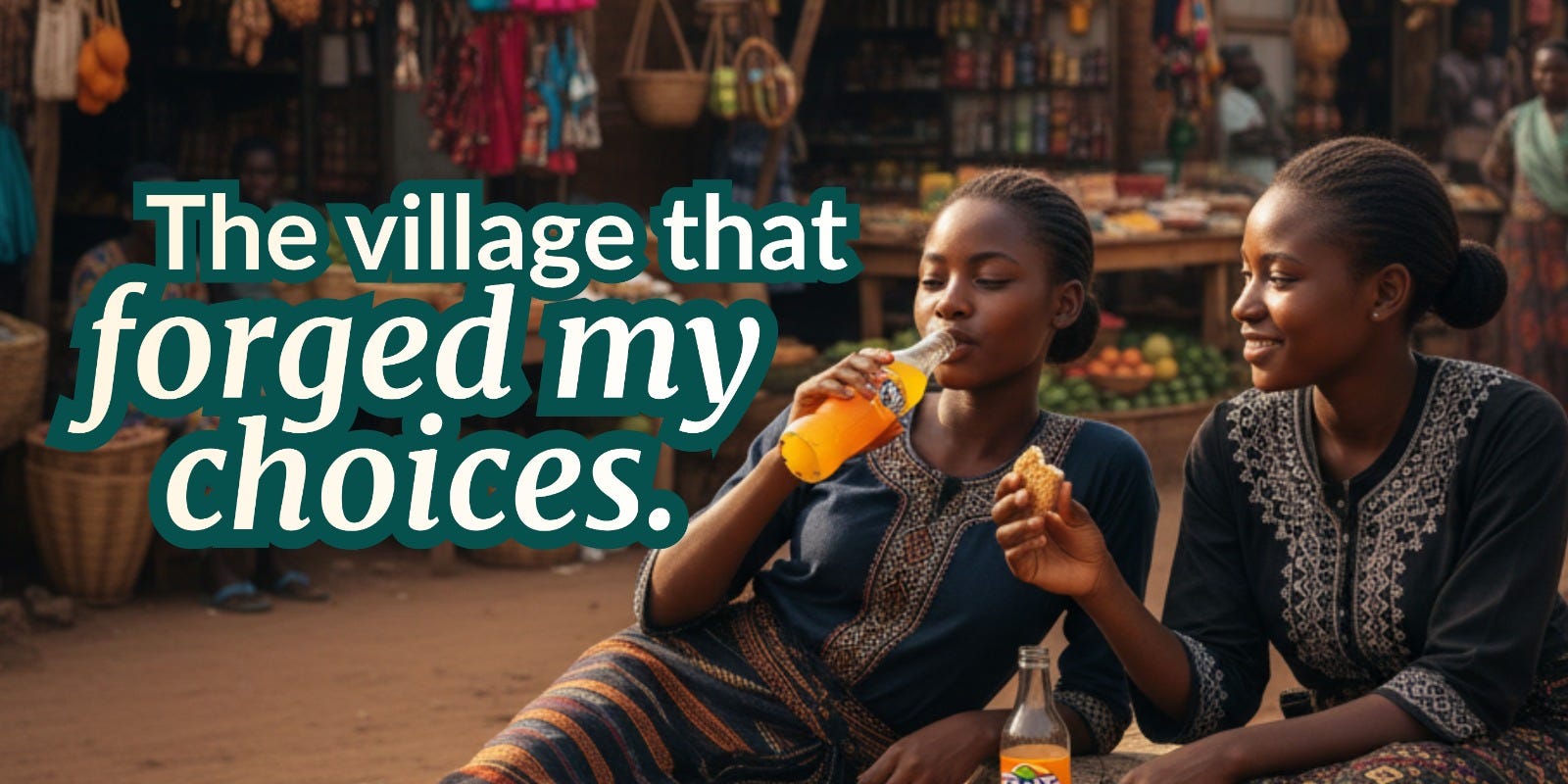
Bongie visited every day, we’d walk to the shops, buy vanilla cream biscuits and Fanta orange, and lie on the warm rocks, pretending they were cruise ship decks. With every chapter l finished, we would discuss for hours on end. We were no longer village girls; we were women of the world, untouchable and invincible.
The birds?
The fields?
Forgotten. Completely.
Weeks passed. Out of curiosity or guilt, I decided to visit the field. “Let’s just pass by,” I told Bongie, trying to sound casual.
When we got there, my eyes widened. The maize was tall and golden, the watermelons swollen and split from ripeness. The field had bloomed without me. We raided those watermelons, laughter echoing through the field. We even roasted maize cobs. Life was good.
For two more weeks, we lived in our paradise of fanta, stories, and roasted maize until one afternoon, I saw the dust rising from the road. My cousin’s car was suddenly there with my mother. Bongie left immediately with barely a goodbye.
Every nerve in my body froze. I swear, even the birds went silent.
As the car rolled closer, my mind started rewriting history, every skipped morning, every watermelon, and every cob. My freedom collapsed fast.
That was the moment I finally understood what no lecture or punishment could ever teach me. Instructions are not cages; they are boundaries of wisdom drawn by those who have lived long enough to see further than our youthful eyes can reach. We often mistake them for control, for limitations meant to tame our freedom, when in truth, they are the quiet guardians of consequence.
When the car stopped, I smiled my best innocent smile, but mothers don’t see faces; they read souls.
My mum was haste to go to the farm.
The disappointment in my mother when we got to the field was so thick it hung in the air like unspoken thunder. She didn’t shout. She didn’t even lift her hand; that silence was far worse than any beating. You see, when an African mother goes quiet, the ancestors themselves lean forward to see what happens next.
The birds had finished all the grains, not a single grain left behind. The field was silent and empty. I stood there, heart pounding, knowing that this, this right here, was the end of my peaceful existence.
For the first time in my life, I saw my mother speechless, and let me tell you, that was far more terrifying than her shouting ever could’ve been. Her eyes did the talking, and they spoke fluent disappointment.
I wanted to laugh, not because it was funny, but because the absurdity of our situation was too much to bear. The birds had feasted like royalty while we, the rightful owners, stood there like extras in our own tragedy. Somewhere deep inside, a small, foolish part of me admired their audacity; those winged thieves had accomplished what no child ever dared, leaving my mother speechless.
I felt the weight of her silence more than I would’ve felt a stick. For days, she didn’t look at me the same. I even caught myself thinking, maybe I should just ask her to beat me so this tension can end. Pain fades, but disappointment lingers like smoke.
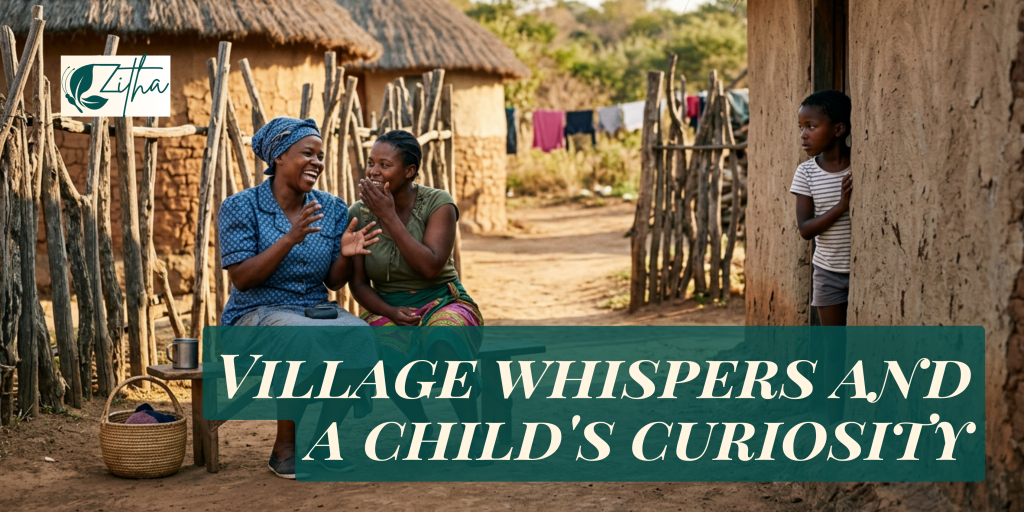
Everyone who came to pay condolences for my Gran somehow found their way to my story. My name was suddenly trending in the village before social media existed. There were whispers, “That’s the girl who let the birds finish the grains,” followed by an exaggerated sigh or a dramatic click of the tongue, or just dirty looks. Bad behaviour was unacceptable in the village.
My mother said if my father hadn’t been the headman, she would’ve taken me before the elders to explain myself publicly, a fate far worse than death. You don’t recover from public shame in the village. It becomes your nickname. Children are named after your mistakes. “Dlisamabele”, Translation: the one who lets the grains be eaten.
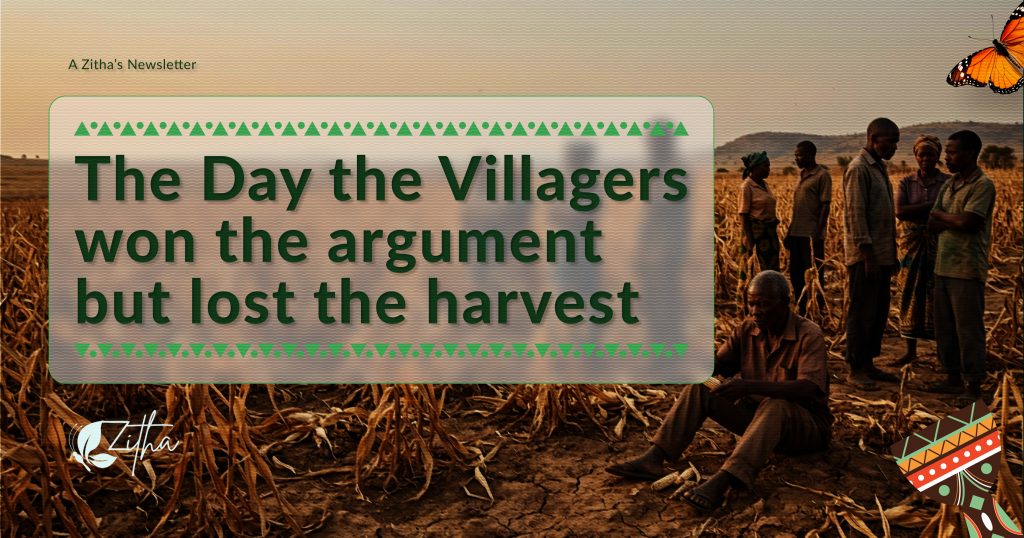
That year, my mother harvested nothing; it was a heavy burden for me to carry.
Relatives came with their counsel, and they spoke in riddles, like all wise people do when they want to say something harsh but still sound holy.
“Children who forget their chores forget their blessings,” one said.
Another nodded solemnly, “Discipline is a language every heart must learn.”
Some came with Bible verses, Proverbs 23:13 (NIV): 13 Do not withhold discipline from a child; if you punish them with the rod, they will not die.
I was fatigued from all this. My mother finally said to me, when l have my children, l will understand fully the pain l have caused her. The answer l could not dare speak out was that my children will not be chasing birds as they will live in the city.
So, now, I’ve learned to pause before I leap, to let the weight of each moment settle in my heart. I don’t just chase the thrill that dances before my eyes. I listen for the echo it might leave, rippling through the years ahead. Every choice, no matter how small, plants a seed that grows into its own harvest, bitter or sweet, it’s mine to reap.
So now, before I act, I pause. I weigh not just the thrill of the moment, but the echo it might leave behind. Because every choice, no matter how small, carries its own harvest. And if you must make one, make it a choice you can defend with your head held high, not one that leaves you stammering, searching for words that make the foolish sound wise. This is the lesson carved deep within me: live with intention, for the echoes of today shape the soul of tomorrow.
Part 2 of this story will be in the next newsletter
Four takeaways for Transformers
1. Freedom without discipline is a trap disguised as joy.
The sweetest liberty quickly turns sour when it forgets responsibility.
2. Instructions are not chains; they are boundaries of wisdom.
Those who’ve walked before us draw lines not to limit us, but to protect what we cannot yet see.
3. Consequences never travel alone.
The ripples of our choices often touch those who had nothing to do with the decision.
4. Laughter and loss can coexist.
Life will always mix sorrow with humour, rebellion with redemption. The art is in learning from both.